Printing and Dyeing Wastewater Treatment Chemicals
Printing and dyeing wastewater often needs a chemical combination that balances color removal, coagulation, flocculation and final settling. This guide explains how buyers can evaluate water decoloring agent, PAC and PAM.
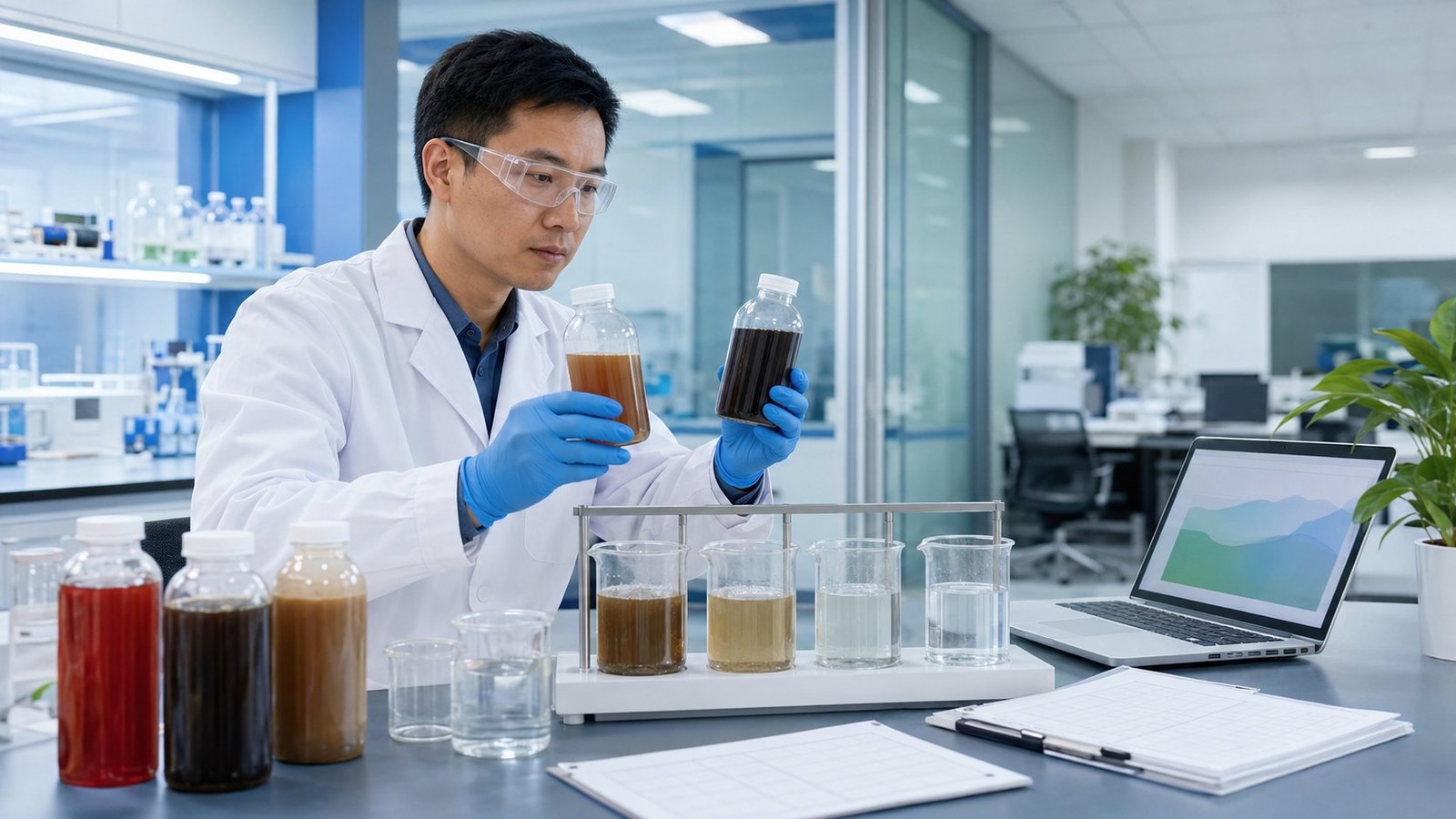
Chemical selection table
| Problem | Possible chemical | Test target |
|---|---|---|
| Strong color | Water decoloring agent | Visible color removal and reaction speed |
| Turbidity / colloids | PAC | Coagulation and floc formation |
| Slow settling | PAM | Larger flocs and clearer supernatant |
| Changing wastewater | Jar test adjustment | Stable performance and cost per ton |
Markets we focus on
We pay special attention to textile and garment markets such as Bangladesh, Vietnam and Sri Lanka, where dyeing, printing and washing wastewater treatment is a common ETP challenge.
FAQ
What is the difference between dyeing and printing wastewater?
Printing wastewater may contain thickeners, binders, auxiliaries and pigments, while dyeing wastewater often contains dissolved dyes and salts. Both require jar testing.
Can decoloring agent be used with PAC and PAM?
Yes. The common approach is to test decoloring agent first, then PAC and PAM if coagulation and settling need improvement.
What should printing mills provide for evaluation?
Send wastewater photo, pH, COD, daily flow, process source, current chemicals and target treated-water color.
Need a dosage recommendation?
Send wastewater source, color photo, pH, COD, daily flow, current chemicals, destination country and packaging requirement. Hubei Haite can support product selection, sample testing and export quotation.