Reactive Dye Wastewater Decolorization
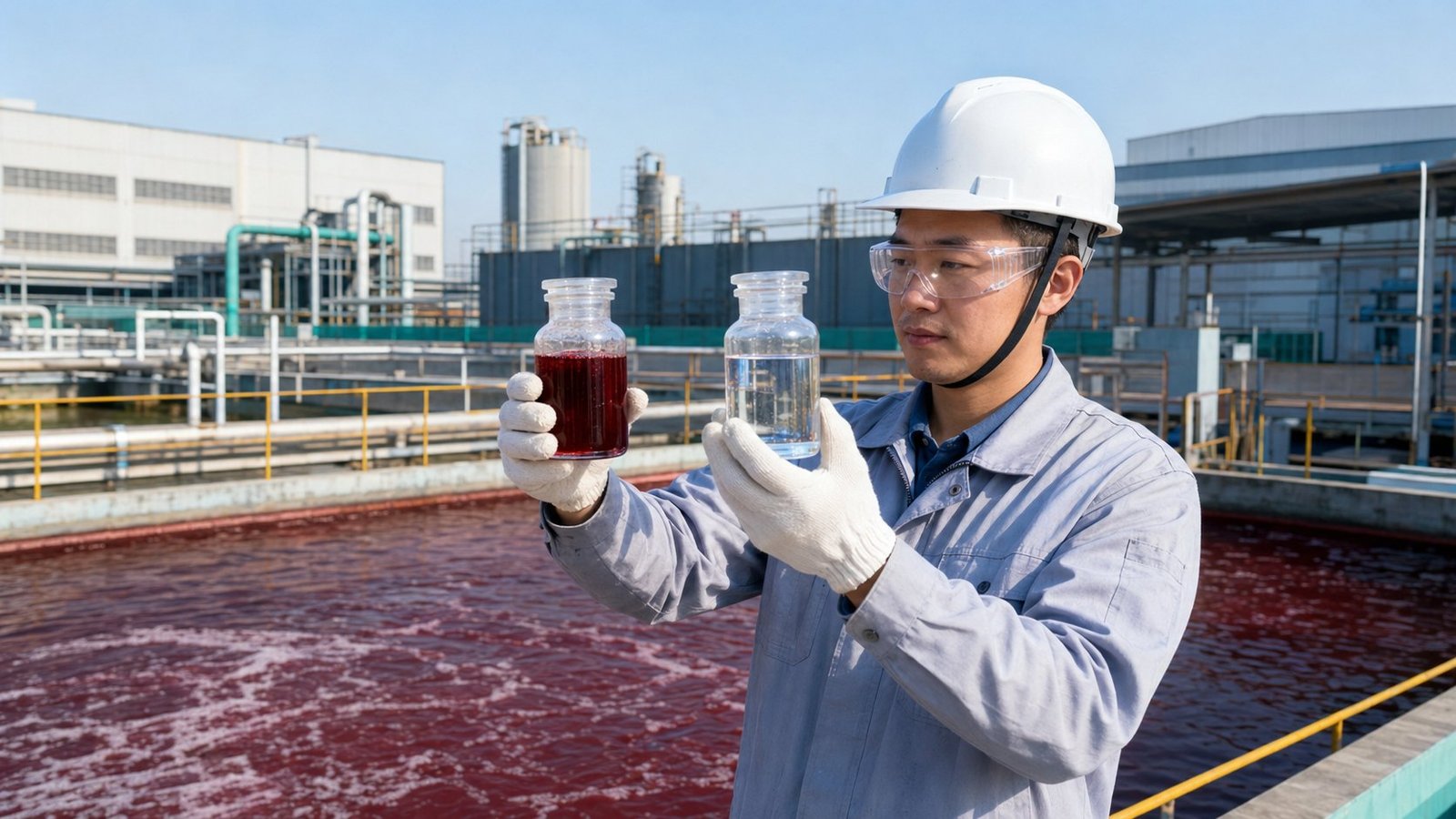
Reactive dye wastewater from textile dyeing and printing can show strong color even after biological treatment. Jar testing helps choose the right decoloring agent dosage and PAC/PAM support.
Common treatment challenges
High visible color
Even low dye concentration can create a strong visible color problem in treated effluent.
Variable dye recipes
Factories may change dye colors and auxiliaries frequently, causing unstable chemical dosage.
Weak flocs
If coagulation is not enough, PAC and PAM may be needed to create stronger flocs and faster settling.
Jar test sequence for reactive dye wastewater
- Measure pH, color and COD if available.
- Dilute the water decoloring agent to a practical test concentration.
- Add decoloring agent under fast mixing, then observe color change.
- Add PAC if turbidity or colloids remain high.
- Add PAM slowly to improve floc size and settling.
- Record ppm dosage and treated-water appearance.
FAQ
Why is reactive dye wastewater difficult to treat?
Reactive dyes can remain highly soluble and visually strong after biological treatment, so chemical decolorization is often needed.
Which chemical is tested first for reactive dye color removal?
A water decoloring agent is usually tested first, then PAC and PAM can be added to improve coagulation and settling.
Does pH affect reactive dye wastewater decolorization?
Yes. pH affects charge neutralization, floc formation and product efficiency, so pH should be recorded and adjusted during jar testing.
Need a dosage recommendation?
Send wastewater source, color photo, pH, COD, daily flow, current chemicals, destination country and packaging requirement. Hubei Haite can support product selection, sample testing and export quotation.